LaTeX templates and examples — Two-column
Recent
Gene regulatory networks have an important role to study the behaviour of genes. By analysing these Gene Regulatory Networks we can get the detailed information i.e. the occurrence of diseases by changing behaviour of GRNs. Many different approaches are used (i.e. qualitative modelling and hybrid modelling) and various tools (i.e. GenoTech, GINsim) have been developed to model and simulate gene regulatory networks. GenoTech allows the user to specify a GRN on Graphical User Interface (GUI) according to the asynchronous multivalued logical functions of René Thomas, and to simulate and/or analyse its qualitative dynamical behaviour. René Thomas discrete modelling of gene regulatory network (GRN) is a well known approach to study the dynamics of genes. It deals with some parameters which reflect the possible targets of trajectories. Those parameters are priory unknown. These unknown parameters are fetched using another model checking tool SMBioNet. SMBioNet produces all the possible parameters satisfying the given Computational Logic Tree (CTL) formula as input. This approach involving logical parameters and conditions also known as qualitative modelling of GRN. However, this approach neglects the time delays for a gene to pass from one level of expression to another one i.e. inhibition to activation and vice versa. To find out these time delays, another modelling tool HyTech is used to perform hybrid modelling of GRN. We have developed a Java based tool called GenNet http://asanian.com/gennet to facilitate the model checking user by providing a unique GUI layout for both qualitative and quantitative modelling of GRNs. As we discussed, three separate modelling tools are used for complete modelling and analysis of a GRN. This process is much lengthy and takes too much time. GenNet assists the modelling users by providing some extra features i.e. CTL editor, parameters filtering and input/output files management. GenNet takes a GRN network as input and does all the rest of computations i.e. CTL verification, K-parameters generation, parameter implication to GRN, state graph, hybrid modelling and parameter filtration automatically. GenNet serves the user by computing the results within seconds that were taking hours and days of manual computation

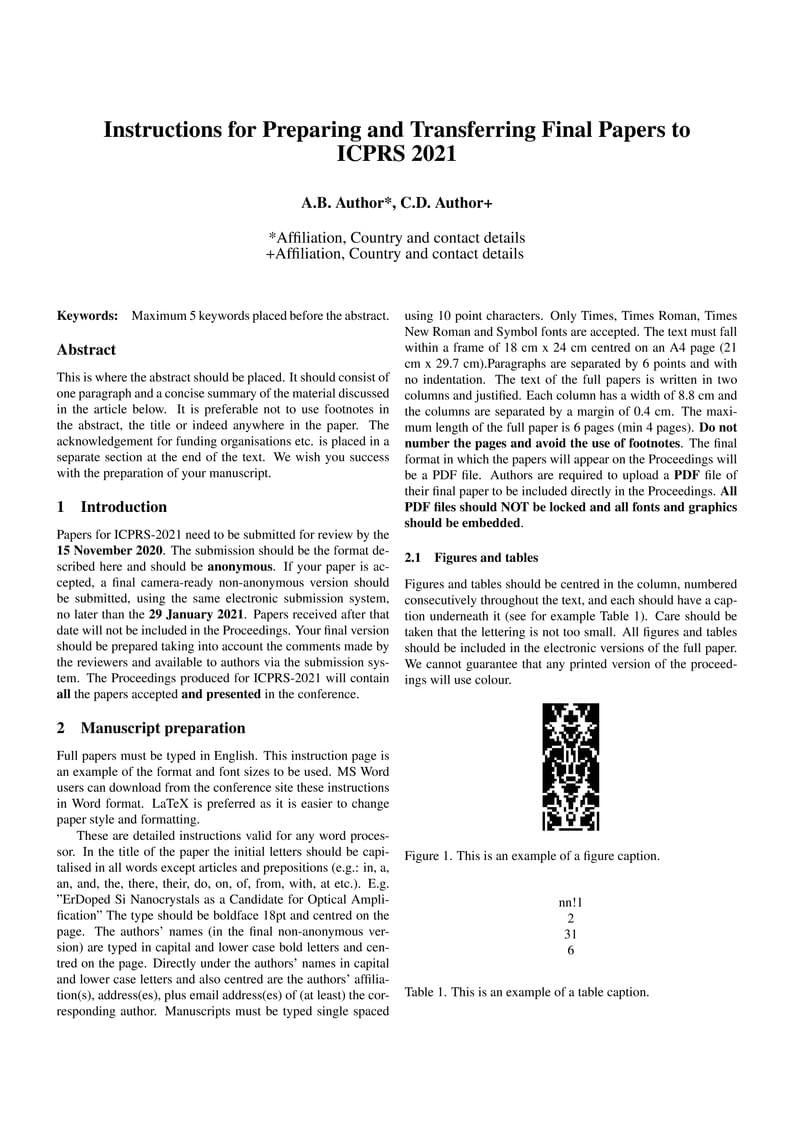
This is a template to perform an article to International Conference on Pattern Recognition systems (ICPRS) Update dates.
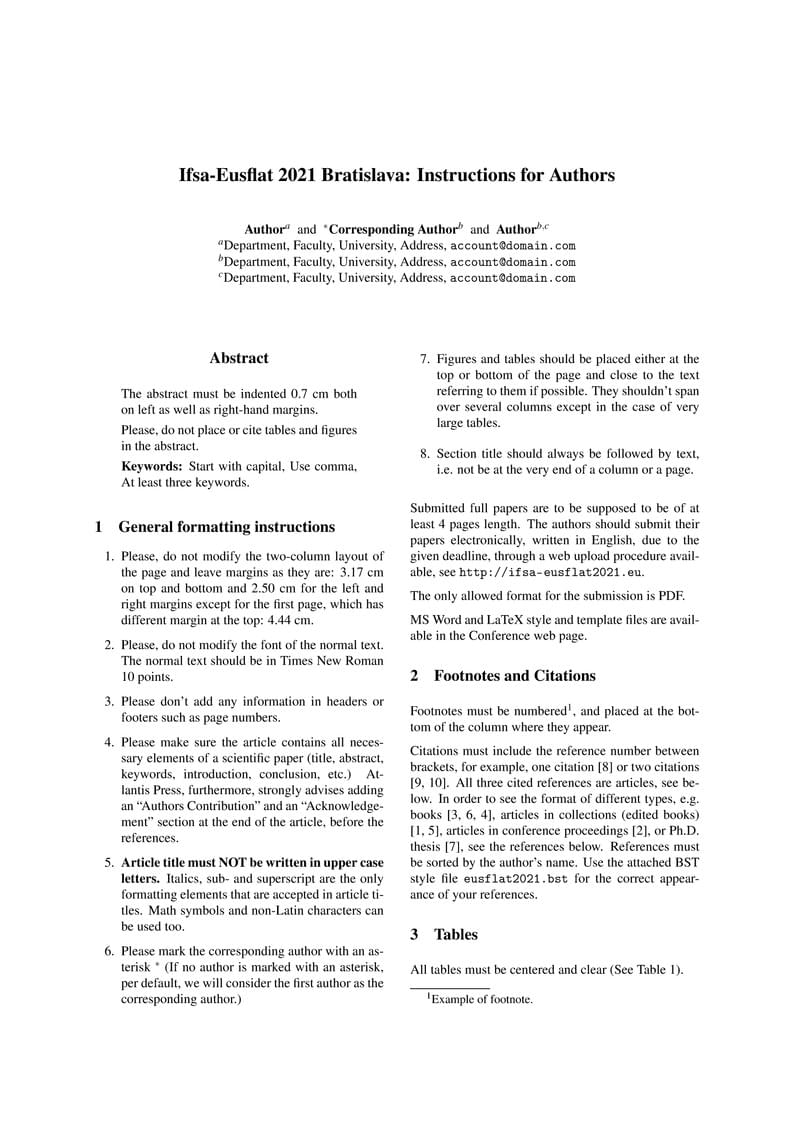
Submitted full papers are to be supposed to be of at least 4 pages length. The authors should submit their papers electronically, written in English, due to the given deadline, through a web upload procedure available, see http://ifsa-eusflat2021.eu/.
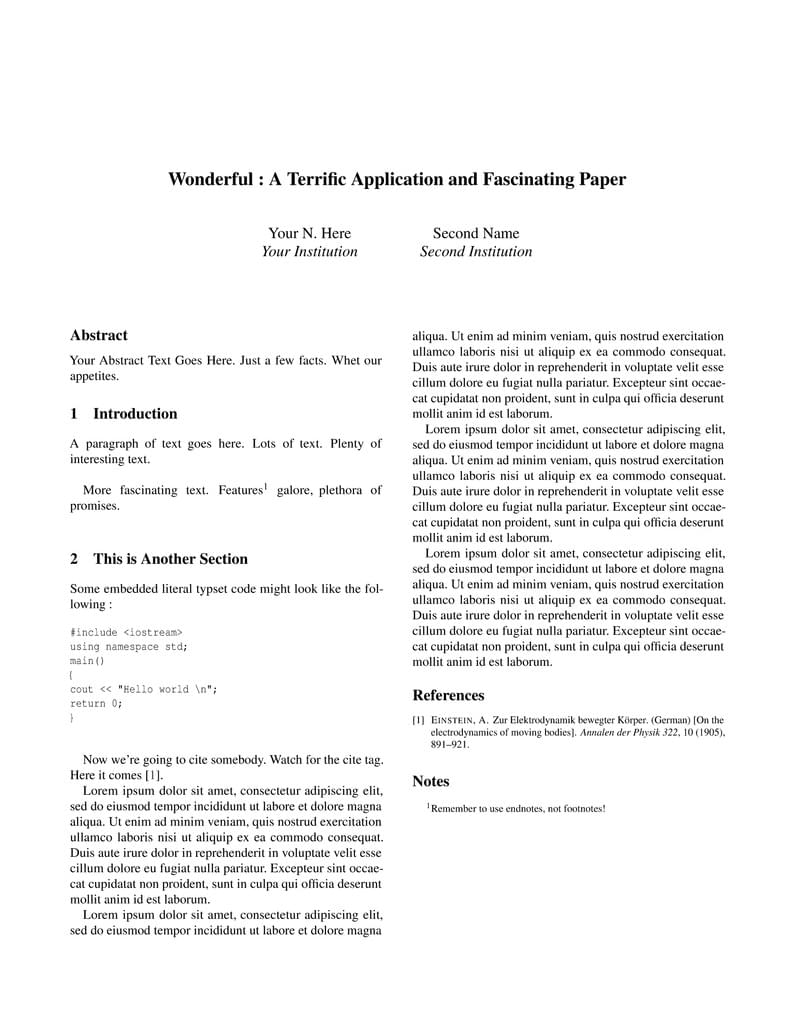
Updated template for USENIX conferences with style file exits dating 2020.
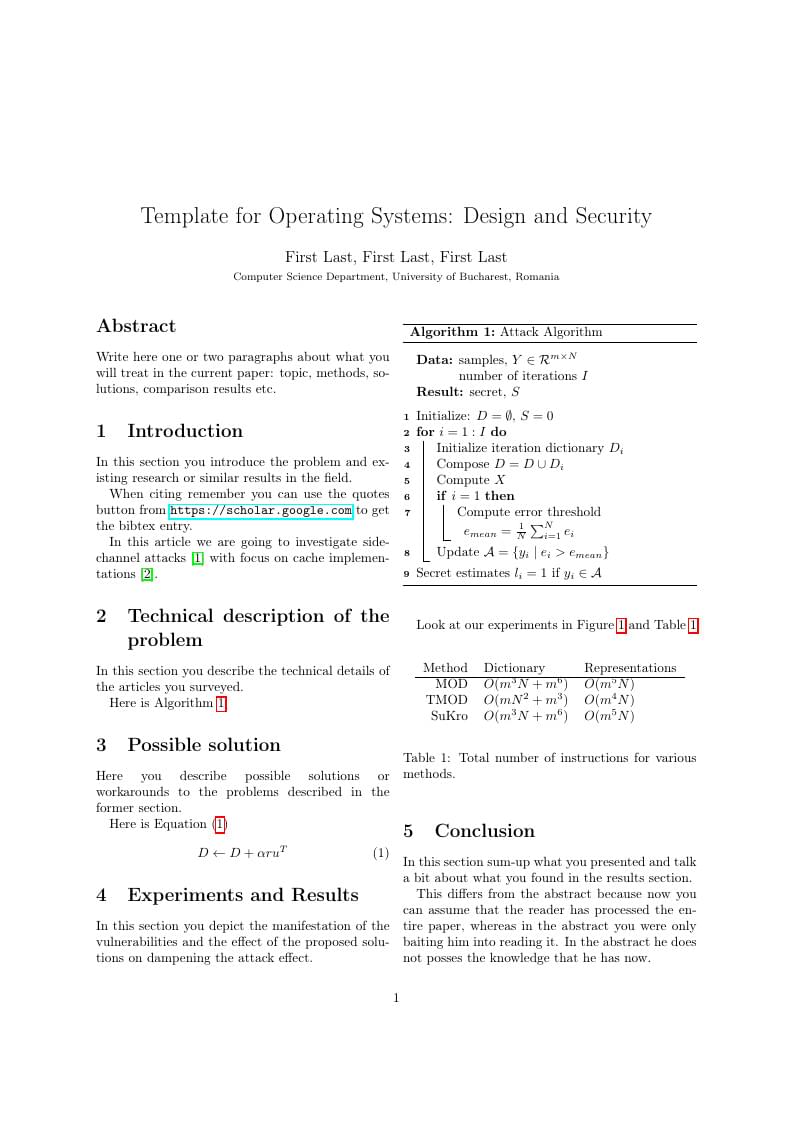
Survey article template for the final exam at the Master's in Security and Applied Logic course "Operating Systems: Design and Security" taught at the University of Bucharest.
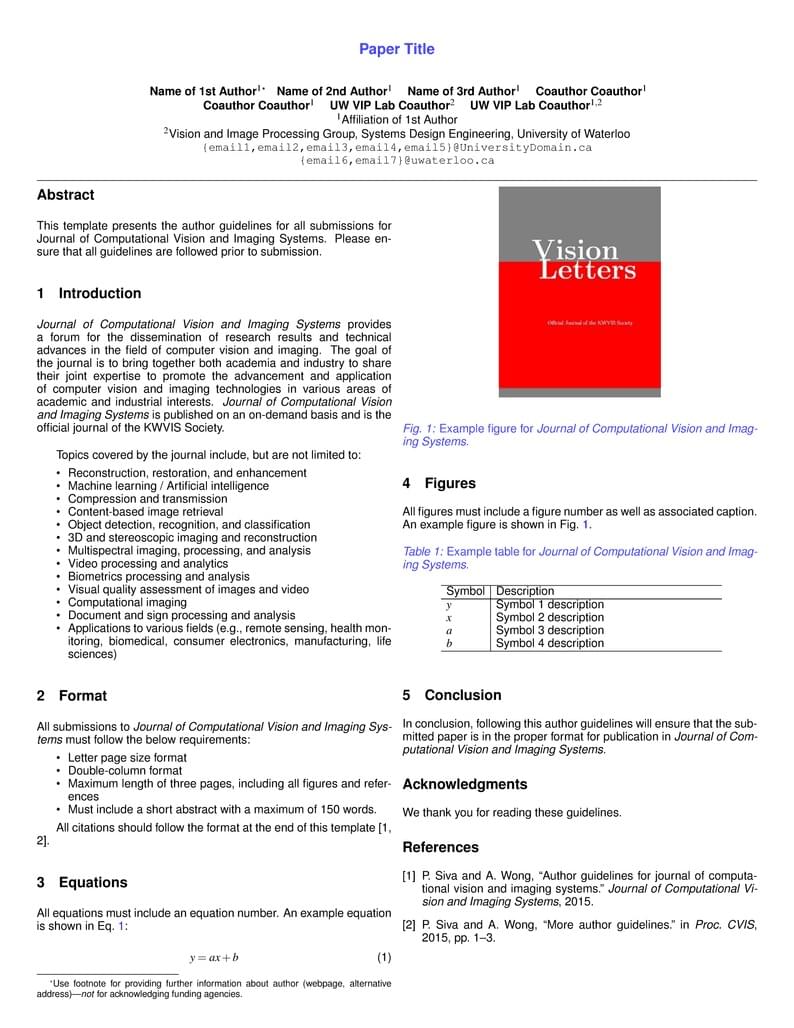
This is the LaTeX template to be used for submissions to the Conference on Vision and Intelligent Systems. Last updated by Nicholas Pellegrino (npellegr@uwaterloo.ca) in October 2023.
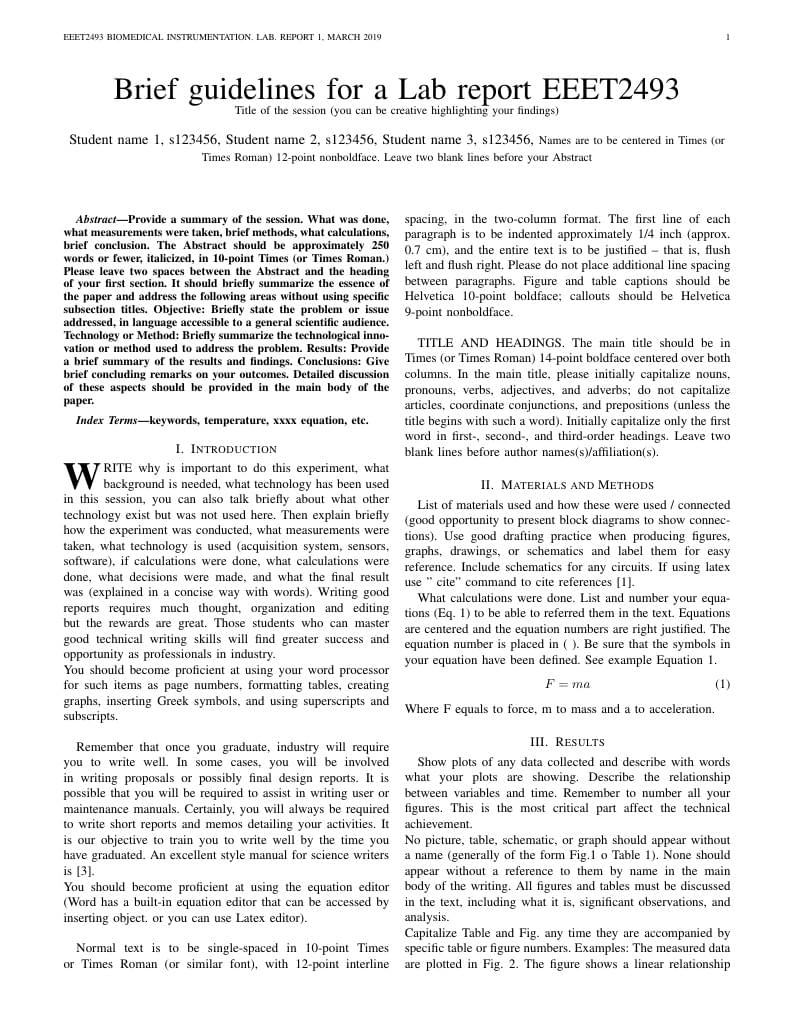
This is a template for a Lab report following an IEEE paper. Modified by Francisco Tovar after Michael Sheel original document. This document will be used for EEET2493 class.
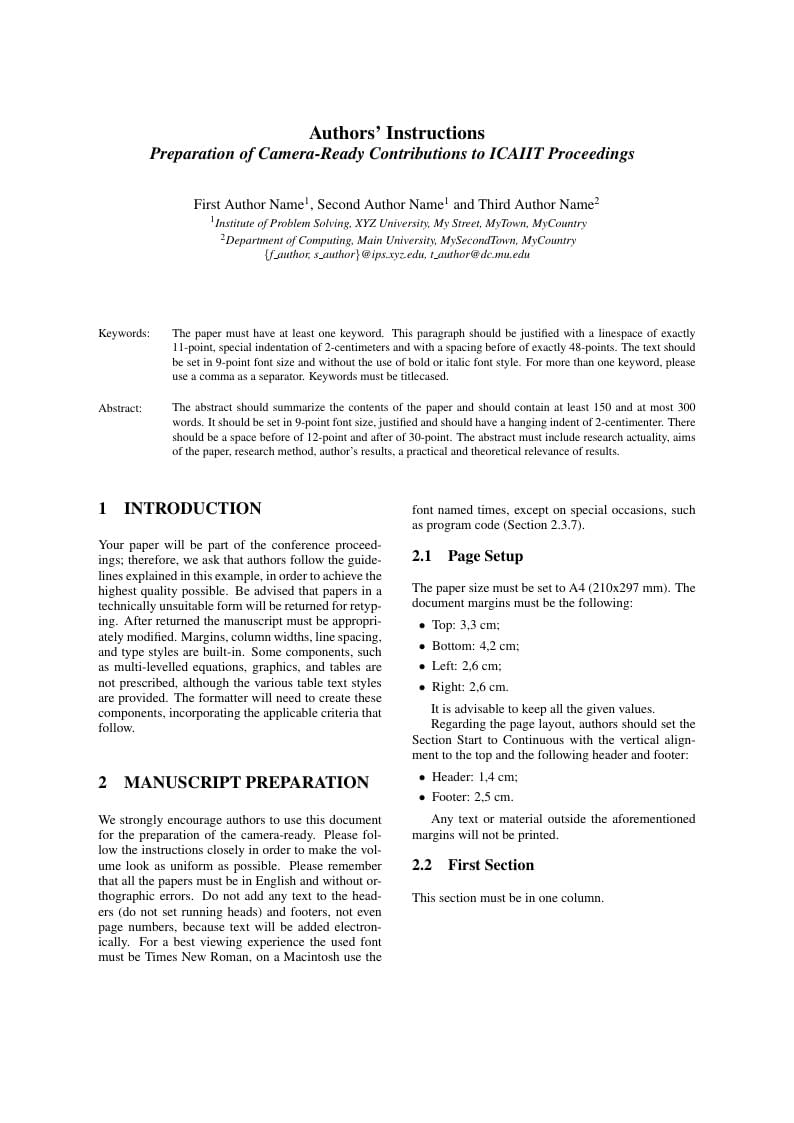
Authors' Instructions Preparation of Camera-Ready Contributions to ICAIIT Proceedings
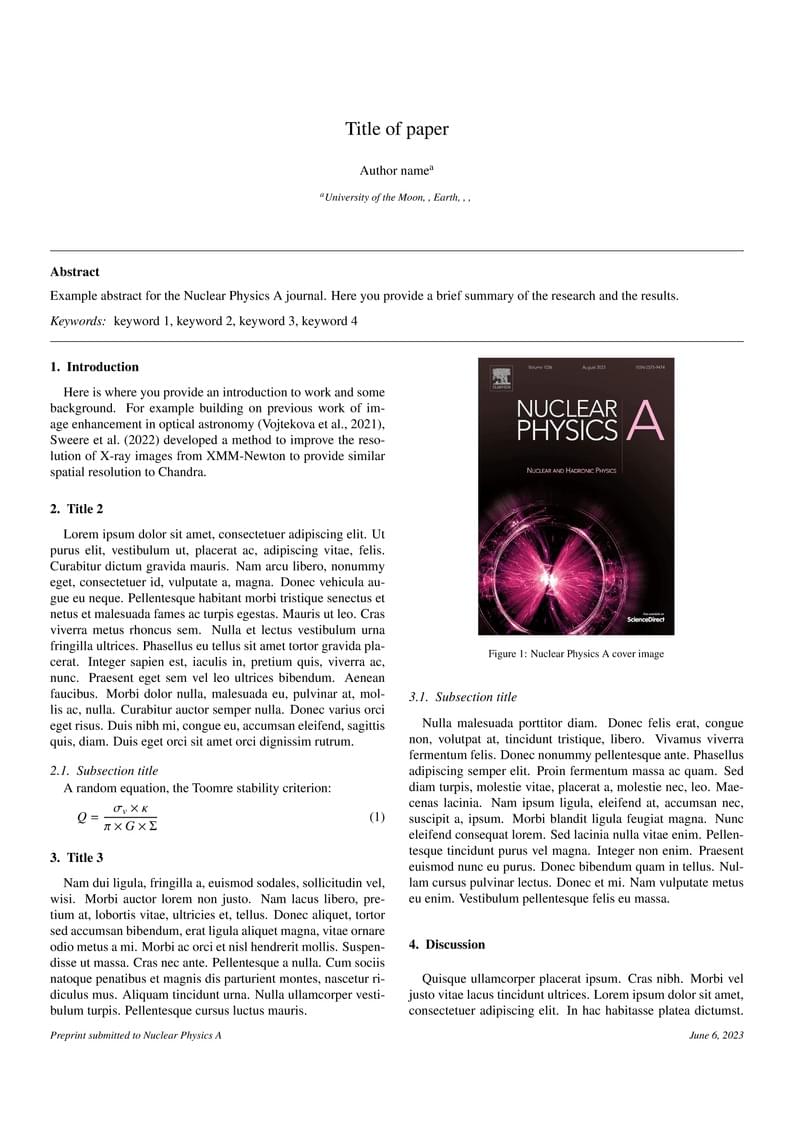
LaTeX template with the updated sources files for a paper to be submitted to the journal Nuclear Physics A.
\begin
Discover why over 25 million people worldwide trust Overleaf with their work.